
Melbourne Cricket Ground
23-25 November 2026
 Australia
Australia
In the contemporary landscape of complex project delivery, the success of an organisation is no longer determined by the isolated efforts of individuals but by the robust integration of management structures and analytical disciplines. At the heart of this integration lies the critical relationship between the Programme Management Office (PMO) and Project Control (PC). While these two entities are often viewed as distinct departments, they are inextricably linked in a symbiotic relationship that defines the organisational capacity for success.
A PMO is defined as a management structure that standardises project-related governance processes and facilitates the sharing of resources, methodologies, tools, and techniques. Its core purpose is to provide support to all parties within the organisation and enable informed decision-making by providing a "single source of truth" regarding performance. However, a PMO cannot function as an empty shell of governance; it requires the data-driven disciplines of Project Control to provide substance to its oversight. Project Control is the set of disciplines focused on implementing methods, resources, and activities necessary to support the team to accomplish project objectives and subsequently monitoring time, cost, and quality.
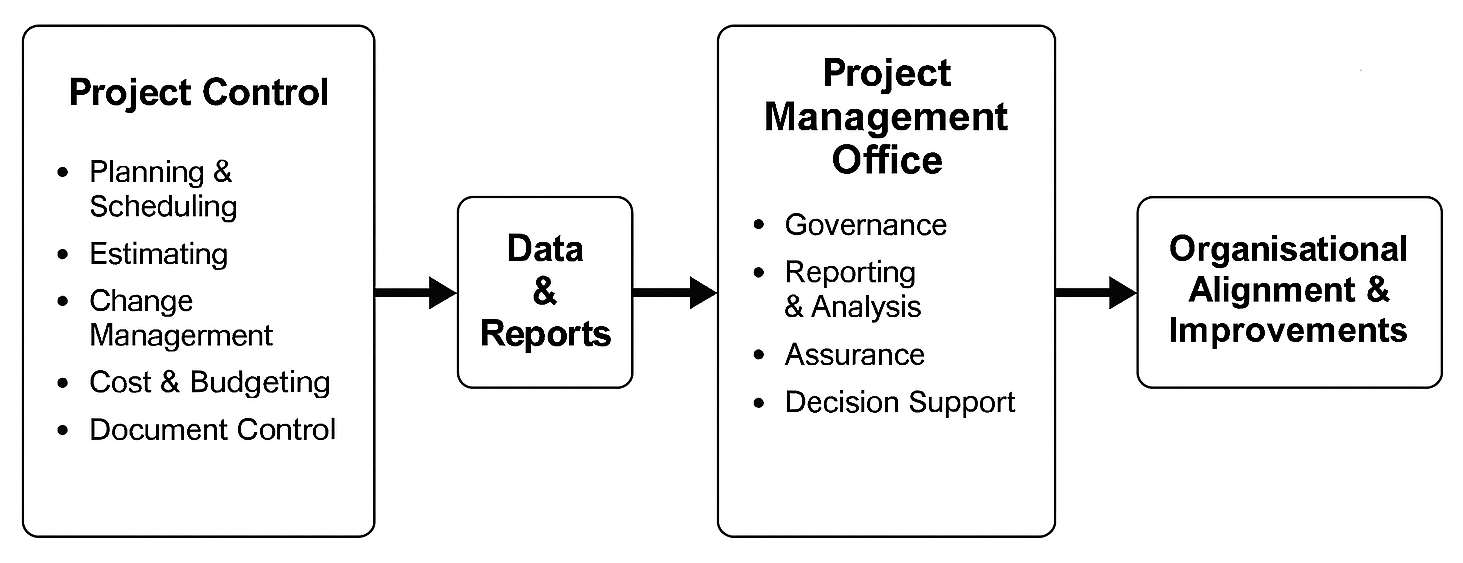
Figure 1 below provides a high-level view of the relationship flow between PMO and project control.
The author of this article explores how these two functions interface to provide enhanced predictability of delivery, manage multi-project complexities, and ensure that every project serves as an engine for the organisation's broader strategic goals.
The PMO has evolved significantly from its origins in the mid-20th century, where it primarily assisted in monitoring and controlling large-scale military and aerospace development projects. Today, it is a well-established concept spanning diverse industries, including IT, construction, manufacturing, and energy. The PMO also serves as a Centre of Excellence (CoE) and a knowledge management hub, promoting project management maturity and standardisation.
The form of a PMO depends entirely on the organisation's requirements. However, the APM (2019) identifies three types, which are:
The PMI (2017) identifies three forms:
Project Control provides the "underpinning" for the PMO and is defined as 'The application of project, programme and portfolio management processes within a framework of project management governance to enable an organisation to do the right projects and to do them right' (APM, 2006). It comprises processes and techniques used to support the PM and the teams to manage scope, cost, time, risk, resources, and performance, using structured approaches such as scheduling, estimating, risk management, cost control, and reporting. As defined in the APM (2015), these processes ensure clarity, consistency, and predictability through quantification, monitoring, and analysis of project performance.
It is not a single activity but a suite of key disciplines that perform these processes, which roll up into the PMO framework to provide a comprehensive view of the project environment. Some of these disciplines are listed below:
Together, these disciplines, as well as the documentation that supports these processes (discussed in more detail below), ensure that the PMO is supported to focus on the deliverable, managing the complex interconnections between people, governance and assurance, etc.
The PMO and Project Control collaborate across key processes, as shown in the table below.
| PMO Area | Project Control Contribution |
|---|---|
| Portfolio Governance | Forecasting, budgeting, risk exposure mapping |
| Assurance | Independent performance data, earned value assessments |
| Risk & Change Management | Quantification, impact modelling, scenario analysis |
| Resource Planning | Resource-loaded schedules, utilisation reporting |
| Knowledge Management & Centre of Excellence (CoE) | Continuous improvement data, lessons learned |
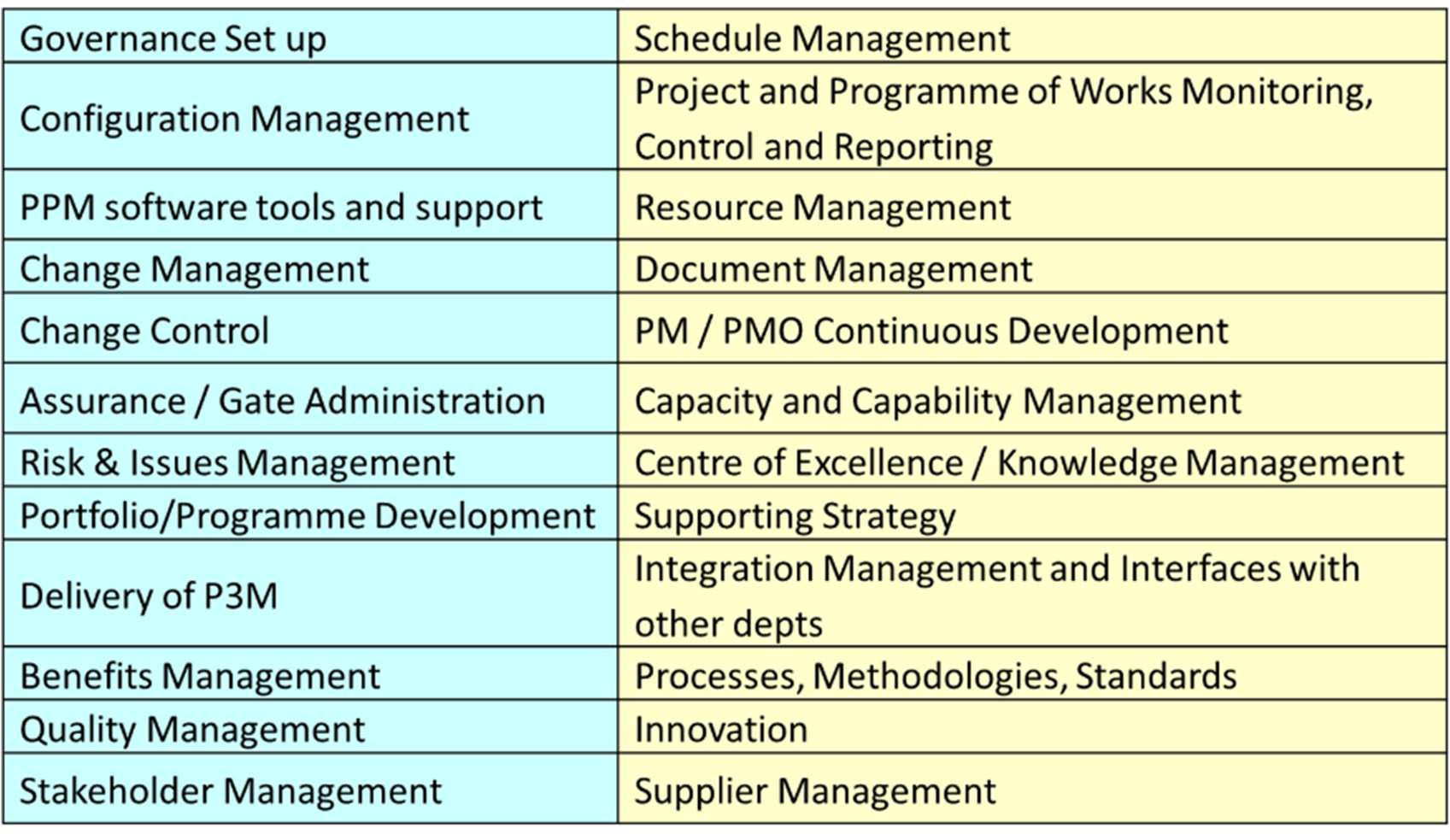
Also, Figure 2 below provides a summarised view of the possible PMO Domain, where again a large number of the deliverables are covered by the Project Control processes.
Derived from Maslow's theory of human motivation, the PMO Hierarchy of Needs (Arnaz-Pemberton) posits that a PMO evolves through five distinct stages as its value to the organisation increases. These are (from the lowest to the highest):
Project Control acts as the 'physiological' base of this hierarchy. Without accurate data on cost and schedule, a PMO cannot satisfy the foundational need and therefore cannot progress toward "Partnership" or "Innovation".
A core principle of a correctly established PMO is providing 'centralisation by decentralising'. In this theoretical model proposed by the author, the PMO centralises the governance, methodology, and standard structures, while decentralising the actual execution of control activities to the project teams. This relationship allows the PMO to maintain the big picture while ensuring project-level agility and accountability.
While Project Control focuses on hard processes and data, the PMO manages, in the majority, the soft interfaces between people.
The Role of the PMO Champion: Establishing a PMO is a major cultural change that often faces resistance. PMO Champions are individuals who roll out requirements to their specific departments and act as a bridge between the PMO management and the project teams.
Supporting Project Managers (PMs): PMs are often under high stress and may perceive PMO processes as bureaucratic overhead. A well-performing PMO supports PMs through a CoE by taking over administrative burdens, allowing the PM and the teams to focus on team leadership and delivery. The relationship is defined by a RACI matrix, which clarifies who is Responsible and Accountable for each control process, reducing conflict.
The most critical link between the PMO and Project Control, as well as all the parties involved in delivering the Project Programme or Portfolio, is the establishment and maintenance of standard project management structures. These structures serve as the 'glue' that allows data to be aggregated across a diverse portfolio. Key structures include:
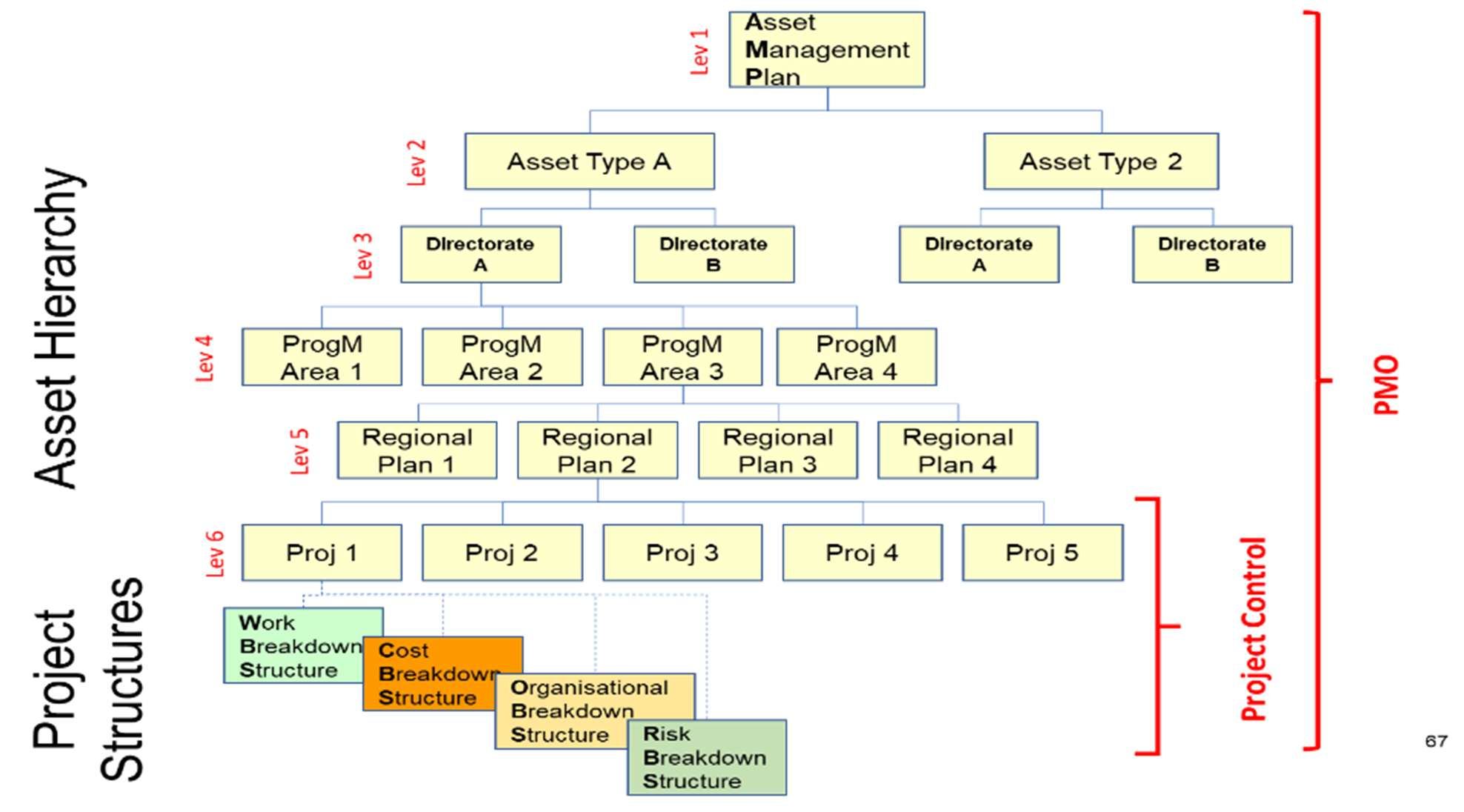
The integration is visualised through the Asset Hierarchy, where granular project-level structures roll up into Regional Plans, then into Directorate levels, and finally into the overall Asset Management Plan managed by the PMO. These structures are the core elements for rolling up data by the PMO to generate "viz-boards" for directors that show real-time performance without requiring manual data manipulation.
Figure 3 below gives an example of the integration of the Asset Hierarchy with the standard project management structures.
The PMO mandates an integrated approach where the scheduling tool (e.g., P6, MS Project, etc.) becomes central to monitoring. By ensuring that schedules are logically linked with a critical path and loaded with resource and cost data, Project Control provides the PMO with the ability to calculate expenditure profiles, forecast long-term resource bottlenecks, and provide data to other departments – finance, supply chain, HR, etc. – as and when required.
The relationship is formalised through two distinct but complementary documents: the PMO Handbook and the Project Control Handbook (PCH).
By mandating that every project follows a standardised PCH, the PMO ensures that Project Control is performed consistently across the enterprise, reducing duplication of effort and improving confidence in data.
The PMO deals with the various agents in an organisation and how they perceive information. To avoid behavioural selective acquisition, where stakeholders only accept data that fits their existing bias, Project Control and the PMO must establish rigorous checks which will allow the management of 'filtering' that occurs in non-linear information flow.
Project Control should act as the "single source of truth", providing validated data for portfolio boards, programme managers, and executives. Figure 4 presents graphically how data (and in most cases reporting) flows through project teams (PC) to PMO and becomes information, via the various project control processes, which then enables decision-making.
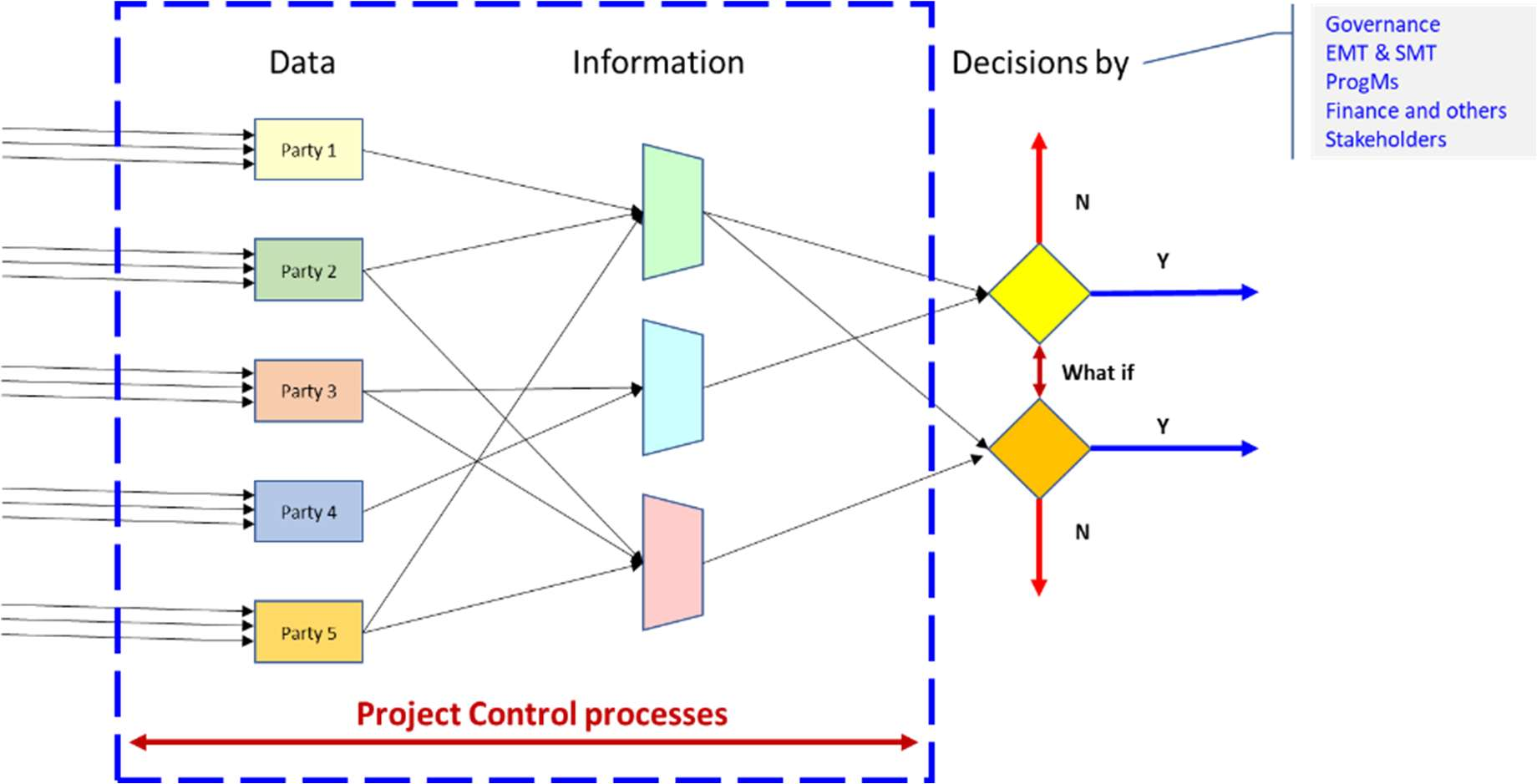
A major cause of project issues is the lack of coordination between requests from various parties. The PMO's role is to regulate the boundaries and minimise influencing factors that lead to information manipulation. Reporting is not merely a contractual obligation; it is built on the "5 Ts":
The relationship between the PMO and Project Control is central to the concept of Assurance, the independent process that provides confidence to the board that a project is on track to deliver its intended benefits.
To ensure robust assurance and governance, the relationship, as described by APM (2004 & 2019), follows a three-tiered approach:
PC is crucial to at least the first two lines of defence as it provides not only the data but also the robust processes which will provide the confidence to the PMO and the higher level of organisational structures.
The board has overall responsibility for governance, but it relies on the PMO to provide relevant and realistic information. Project Control data allows the board to:
Responsibility for strategy lies with leadership, but the PMO provides insight into what is possible to achieve. By knowing the organisation's true capacity, derived from Project Control resource tracking, the PMO advises on outsourcing or contract workers to expand delivery capability rapidly.
At a higher level and in support of a more strategic role, it is possible for an international organisation to establish an EPO.
Figure 5 below presents a fully integrated EPO with the local PMOs and overseeing the whole monitoring and control processes as well as other functions. For example, overseeing:
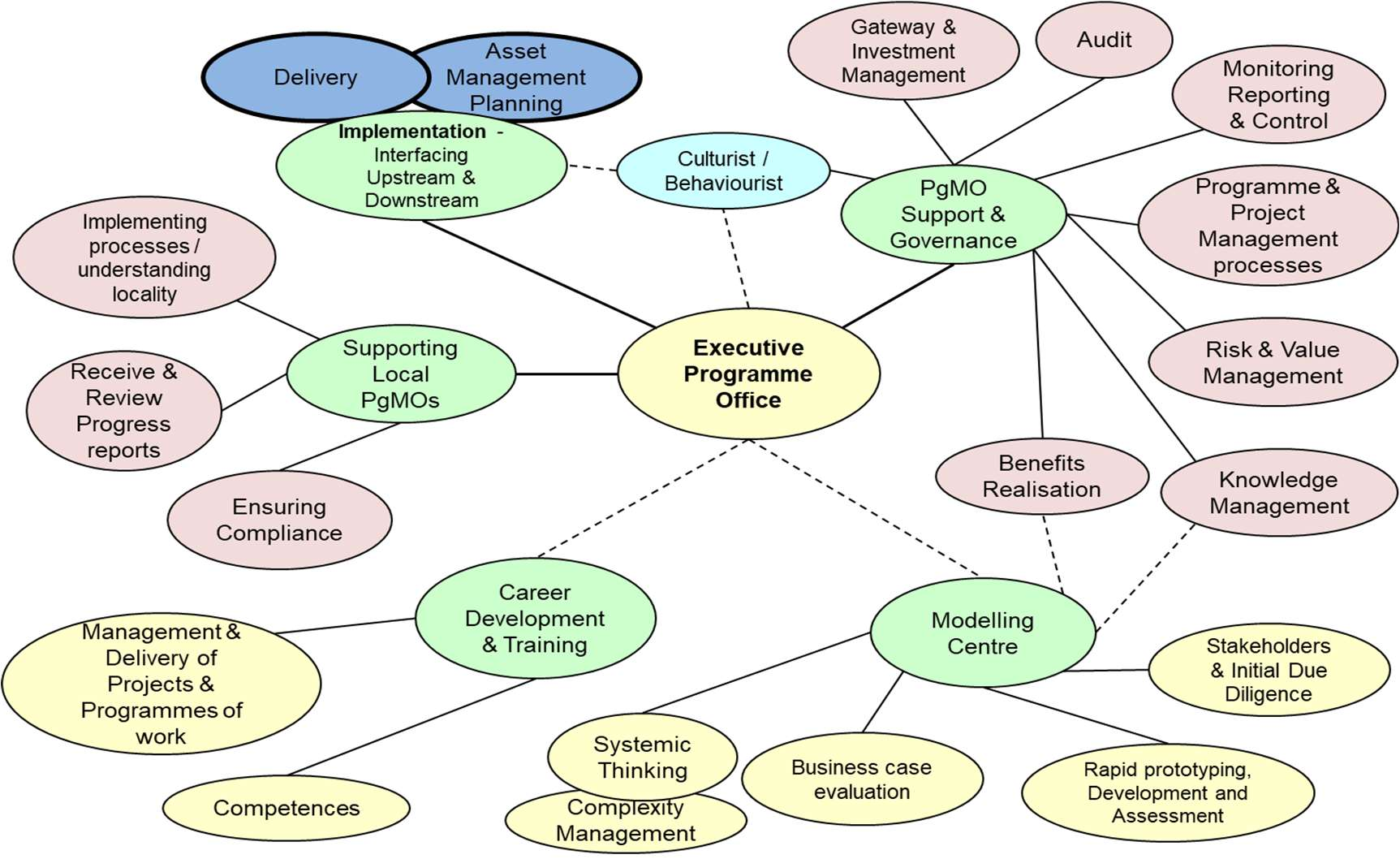
Modern project delivery requires the linking of Project, Programme and Portfolio Management (P3M) delivery and Strategic Management through ERP software. The PMO could be the department that undertakes the overall responsibility for the maintenance and implementation of the software tools that support Governance decision-making for P3M.
One of the biggest advantages of a PMO is the reduction of duplication through system automation. PMOs often define or manage enterprise-level systems (ERP, project control tools, reporting platforms, etc.). By integrating project control software tools with financial ERP systems, data entered at the project level can automatically update corporate-level finance and resource modules, establishing a Bottom-Up rolling of data. The software setup, through the standard structures and coding, should also enable the Top-to-Bottom flow of data.
Figure 6 below demonstrates how the various software tools are integrated to support Asset Management and Delivery. The author contributed to the rolling out of the system depicted in this figure whilst working for a major utilities organisation.
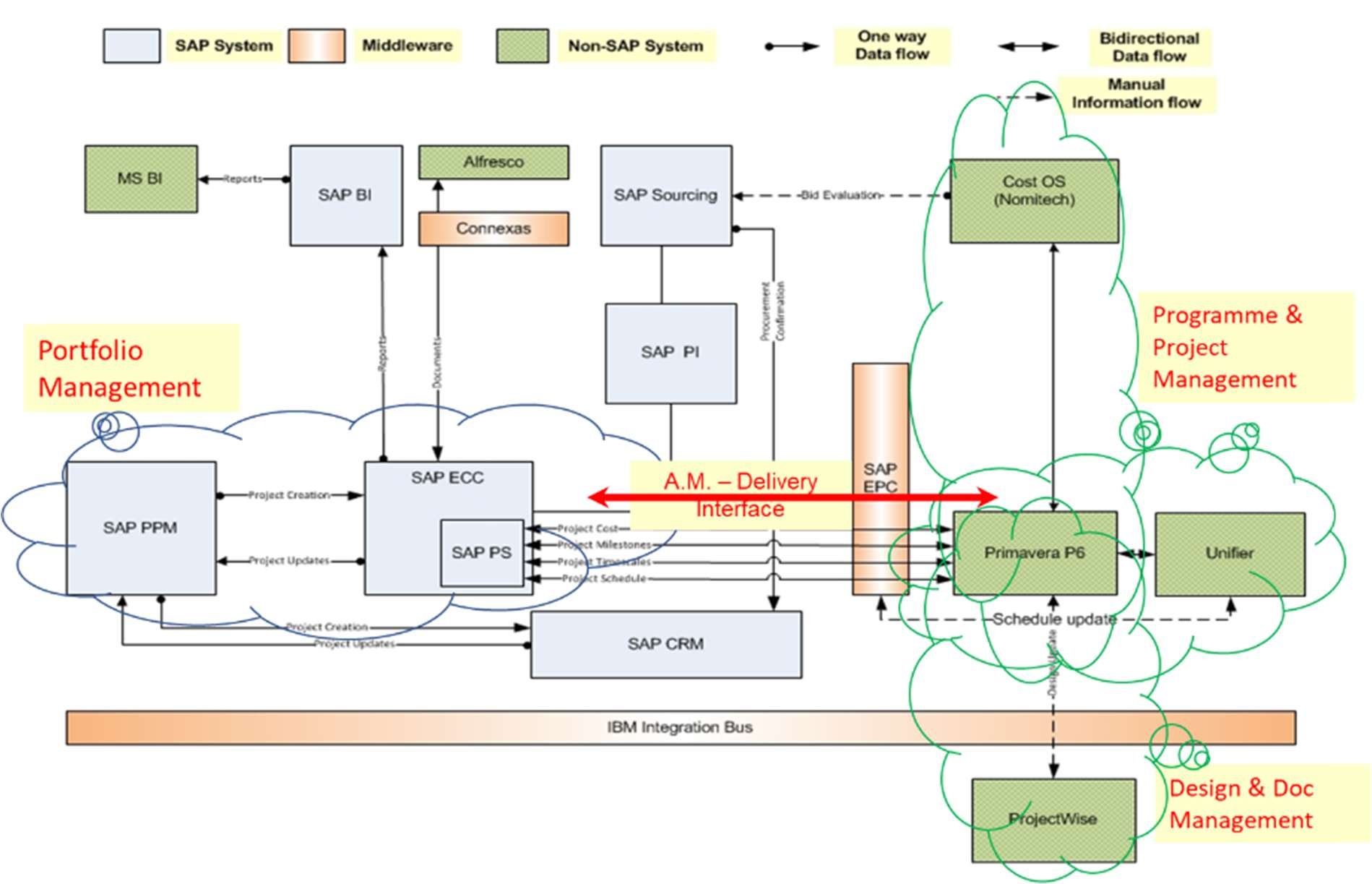
With the advent of technologies, the future of the PMO-PC relationship lies in becoming an even more data-driven one. AI technologies, such as predictive analytics and Robotic Process Automation (RPA), are transforming the PMO role.
In this digital era, the PMO takes on the role of 'Data Hunter, Data Gatherer, and Data Farmer', serving as the ethical custodian of the organisation's project data lake and providing (through the PC) the human in the loop.
The PMO – Project Control relationship is both structural and cooperative. PMOs shape the governance, processes, behaviours, and systems necessary for organisational consistency and strategic execution. Project Control enables the PMO to perform these functions by providing the analytical foundation upon which decisions, assurance, and improvements are made.
A high-performing organisation is one in which both areas:
PMOs fail when context, interfaces, and behaviours are not addressed, areas in which Project Control can provide stabilising influence. Conversely, Project Control fails without the PMO's oversight, governance, and systems support. The optimal relationship is therefore one of mutual reinforcement. The latest technologies will enable and will require a much closer integration between PMO-PC and therefore, organisations will need to consider carefully the type of PMO to be set up as well as the departments that will be included within it.
Australia


