
Melbourne Cricket Ground
23-25 November 2026
 Australia
Australia
The Fourth Industrial Revolution (4IR) presents significant technological disruption, forcing project management and control professionals to embrace new digital tools. In this article the author explores how technologies, particularly Blockchain and Artificial Intelligence (AI), are fundamentally transforming project delivery, monitoring, and control processes, especially within the construction sector. These technologies address persistent industry challenges, such as low productivity and lack of trust, by enhancing data integration, transparency, accuracy, and operational efficiencies. Using case studies and conceptual frameworks, this article illustrates how AI leverages standard structures (i.e. Work Breakdown Structure, etc.) to automate tasks and provide predictive insights, while Blockchain ensures secure, transparent transaction record keeping via mechanisms like Smart Contracts. However, realising these benefits requires systemic transformation, a focus on cultural change, and maintaining the critical 'human in the loop' for successful decision-making.
The modern project environment operates within conditions characterised as VUCA:
Navigating this reality demands not just incremental improvement but fundamental organisational and technological transformation. We are firmly in the era of the Fourth Industrial Revolution (4IR), which is characterised by rapid, continuous, and momentous technological changes where the potential for disruption is and will be ever present.
In industries such as construction, this technological necessity is vital for tackling long-standing productivity issues. The integration, accuracy, transparency, speed of data transfer, and trustworthiness of project data/information are essential for sound decision-making and effective project control. Traditionally, the industry has faced challenges due to a lack of data and software tool integration, poor management of the design process, and disrupted workflows.
The current response involves leveraging advanced technologies, primarily blockchain and Artificial Intelligence (AI), alongside existing digital techniques such as building information modelling (BIM) and the Internet of Things (IoT). Blockchain introduces mechanisms such as automated workflows, transparency, and legally binding smart contracts, creating a catalyst for change, especially in supply chain management and payment security. Concurrently, AI leverages machine learning (ML), natural language processing (NLP), and predictive analytics to revolutionise project control processes, enabling project controllers to be proactive rather than reactive.
The objective of this article is to explore the intersection of these technologies and project control, detailing the underpinning theory, presenting practical examples, and discussing the necessary systemic and cultural changes required for successful adoption and maximised benefit.
The successful delivery of projects within complex, inter-organisational systems relies heavily on achieving a collaborative environment supported by technology, a genuine transformation. This transformation requires establishing fundamental prerequisites, primarily the use of common standards and the successful integration of data and software systems. The core of this system based approach is understanding how to interlink standard project management structures, especially the Work Breakdown Structure (WBS) and Cost Breakdown Structure (CBS), and how these structures roll up data into meaningful information for decision-making.
Blockchain technology moves beyond its widely known application in digital currency (like Bitcoin) and is considered by some to be as important as the internet in its potential impact. In the built environment, blockchain is seen as enabling a network of trust established through mass collaboration and 'clever code' rather than relying on powerful human intermediaries.
The pervasive use of blockchain in construction supports critical functions such as:
| 1 | Smart Contracts Payment Mechanisms |
| 2 | Retentions Protection |
| 3 | Digital Identity and Intellectual Property Rights |
| 4 | Supply Chain Management (often linked to BIM) |
| 5 | Project Monitoring and Control Processes |
Artificial Intelligence (AI) refers to the study of 'intelligent agents', autonomous non-human entities capable of taking in information from their environment and acting upon it to succeed in defined goals. For an intelligent agent to function, it must have mastered Machine Learning (ML) and aspects of predictive data analytics. ML involves specific steps to manage data, including identifying, structuring, cleaning, enriching, validating usefulness, and documenting the analysis.
AI significantly enhances project control by:
Crucially, the successful deployment of powerful AI systems requires the ongoing intervention of the ‘human in the loop’. This human oversight is necessary to check, approve, and release actions recommended by an AI agent, particularly in sensitive areas like the critical path of a schedule
To illustrate the drivers for adopting future technologies and the framework for integration, three key areas of evidence are presented as figures.
The adoption of new technology is driven by the urgent need to address the productivity lag evident in the construction sector. As illustrated in the productivity chart shown below in Figure 1, construction lags significantly behind the manufacturing sectors and the average global economy.
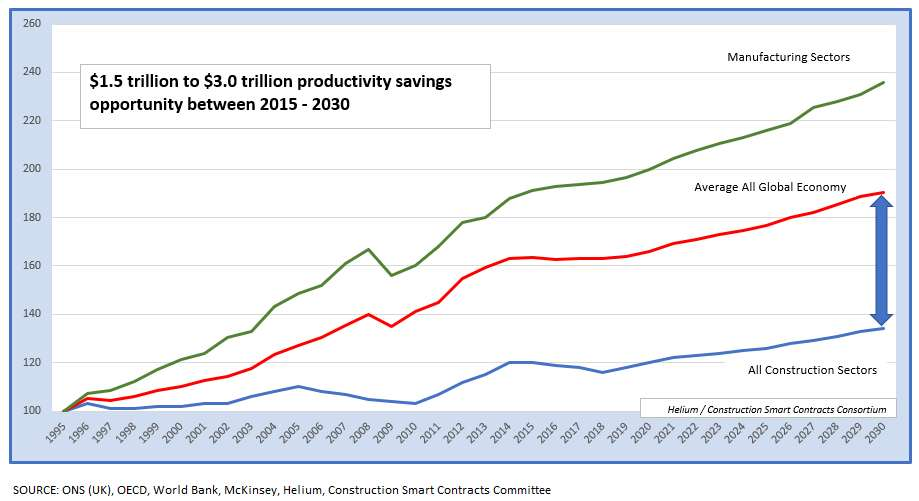
The identified productivity gap presents a $1.5 trillion to $3.0 trillion productivity savings opportunity between 2015 and 2030. Furthermore, the UK Government's 'Construction Sector Deal' policy paper aimed for a 33% reduction in construction costs and a 50% reduction in time taken from inception to completion of new builds, reinforcing the strategic push for digital techniques across all phases.
The bubbles in Figure 2 below give an indication of the current technologies that are used and could be used in the majority of the project monitoring and control processes and for the delivery of a project, programme or portfolio.
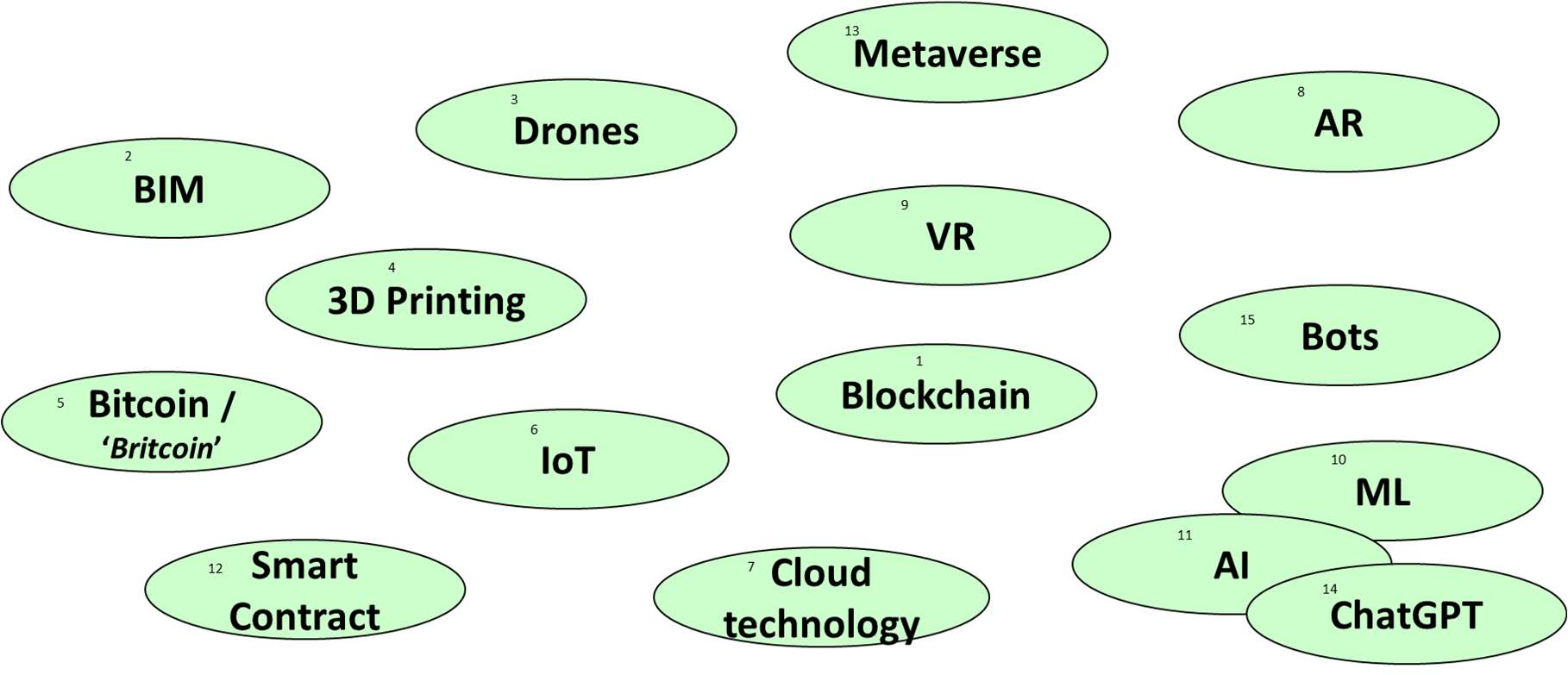
In various articles and presentations/podcasts, the author has given a number of examples of how these technologies can support project monitoring and control.
Before new technologies like blockchain and AI can be effectively leveraged, an organisation must establish an integrated system structure that manages the flow of data. The concept of an Integrated Programme & Project Management System (Figure 3) demonstrates how various software tools interface to provide comprehensive project control.
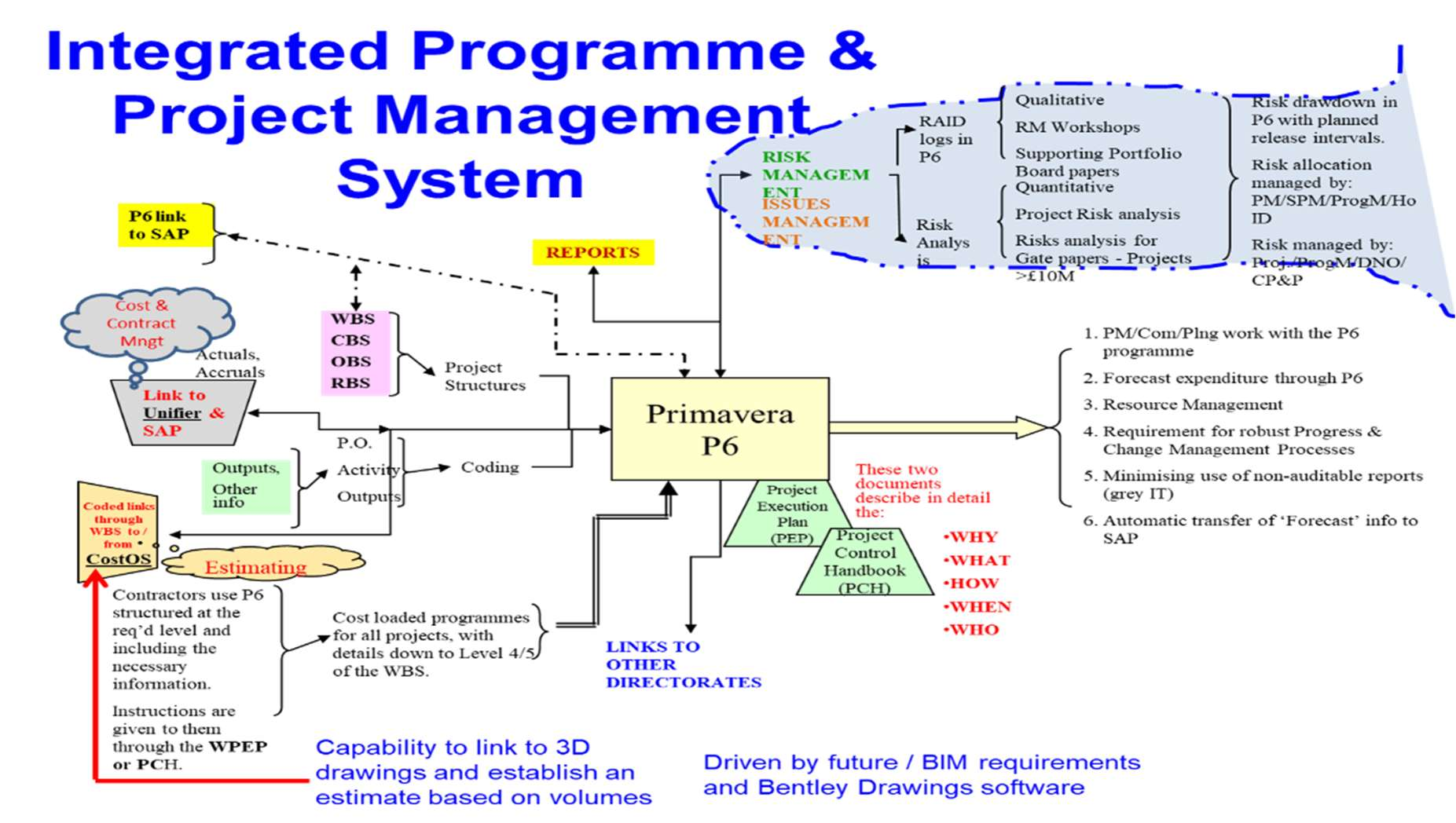
This integrated system requires the proper structuring of data to facilitate efficient delivery and transfer of information from the project level up to the programme and portfolio levels. This structure, linking software tools such as Primavera P6 with SAP, Unifier (for cost and contract management), and CostOS (for estimating), is fundamental to developing the 'truly open and transparent environment' required for collaborative work and minimising intrusive monitoring activities. This holistic view is necessary for preparing systems for further advancements, such as blockchain prerequisites and AI / Machine Learning (ML) for analytics.
To support the organisation, the PMO or the relevant department will need to generate a KM (Knowledge Management) environment through the CoE (Centre of Excellence). Figure 4 below demonstrates a KM environment that was set up by the author in a major Utility organisation (for further details, see Antoniadis, 2026).
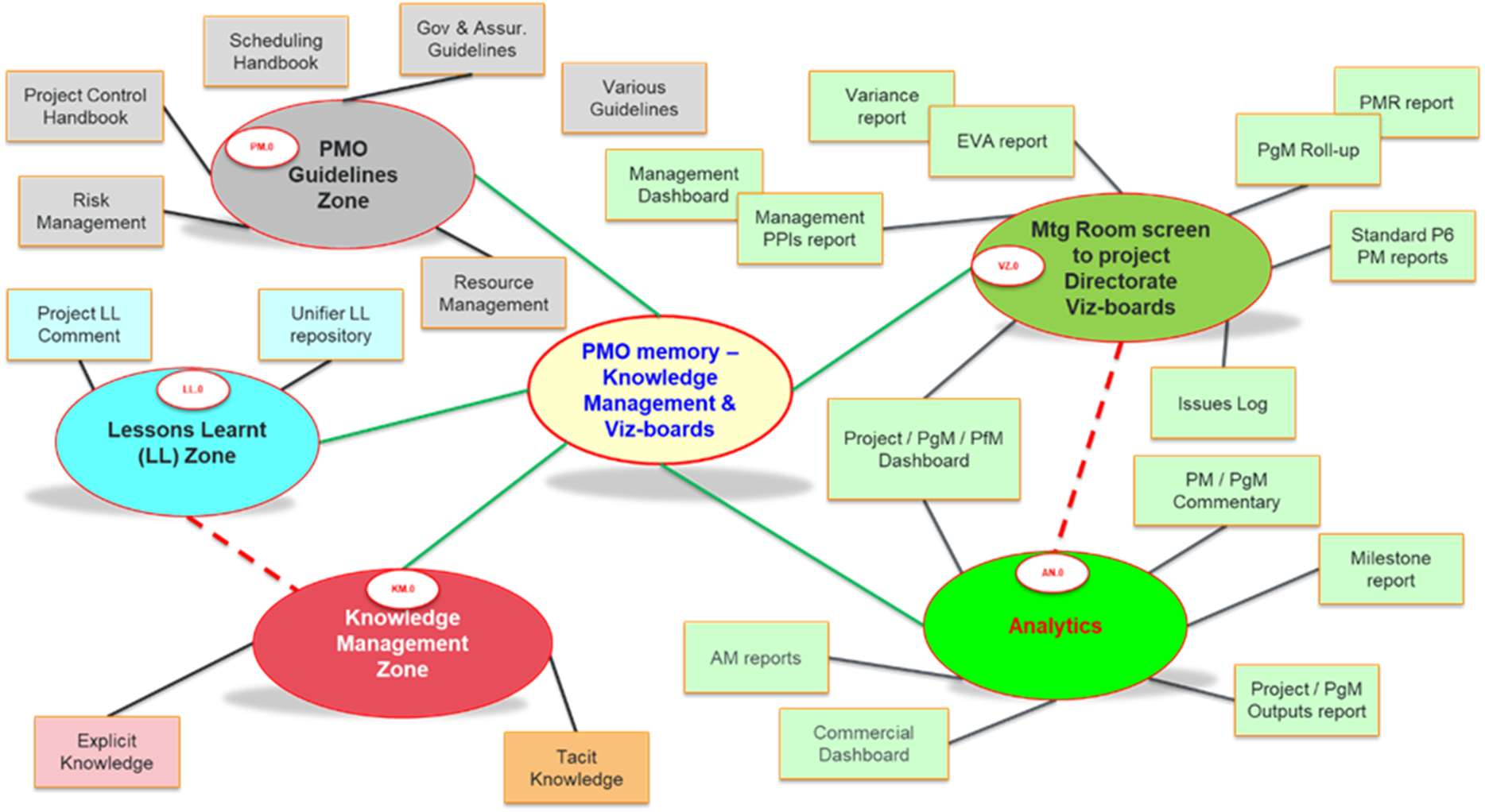
The PMO KM CoE is fundamental for any type of organisation. It could cover what is presented in Figure 4 as well as other areas (depending on the requirements).
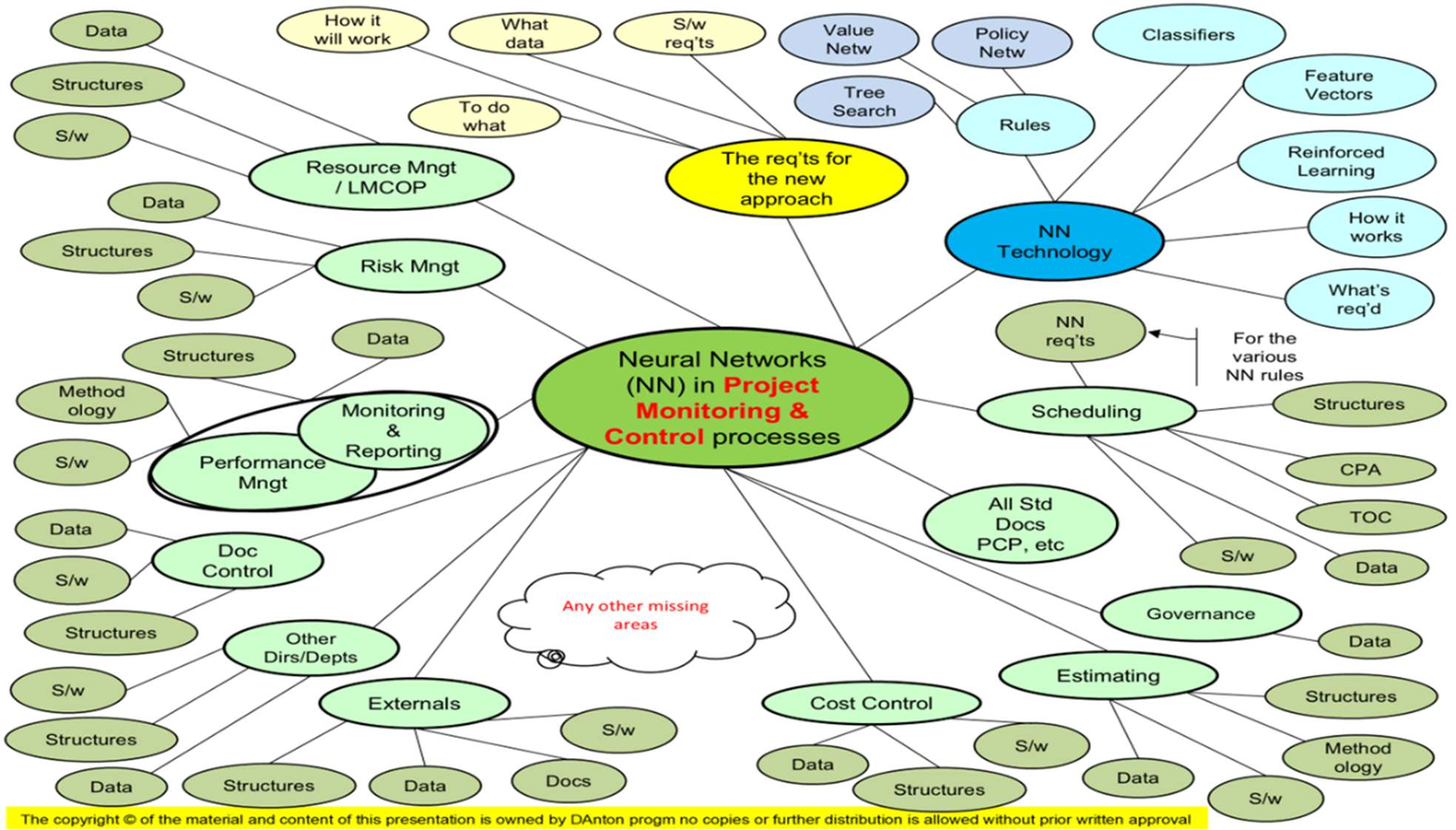
AI is poised to enhance project control by integrating advanced technologies like ML, NLP, computer vision, and predictive analytics across core project control functions. Figure 5 presents the 'requirements', in the form of a mind map, which will need to be considered to deliver project monitoring and control. The 'requirements' depicted in the figure is an attempt by the author to demonstrate the wide requirements and these have most probably been considered by the various software companies that are currently delivering such AI software tools.
The deployment of AI focuses on three key process areas:
AI optimises schedules and predicts delays through various mechanisms.
AI improves cost estimation, tracks budgets, and prevents overruns.
AI proactively identifies, prioritises, and mitigates risks.
The future of project control is inextricably linked to technological evolution, driven by the rapid pace of the 4IR and the need to overcome entrenched productivity and trust issues in the built environment. Technologies such as blockchain and AI offer profound solutions.
Blockchain provides the necessary transparency and automated workflow, embodied through smart contracts or other processes, that acts as a catalyst for change, particularly in commercial processes and supply chain management. Isolated use of blockchain will have no impact; its power lies in providing transparency and automated workflow, complementing digital storage of crucial documents via Common Data Environments (CDE) and BIM Level 2.
AI enhances project control by bringing efficiency, accuracy, proactivity, and scalability to traditional structures like the WBS and CBS, automating tasks ranging from schedule optimisation to real-time budget tracking and predictive risk scoring.
However, technological integration alone is insufficient. The organisational environment must be adapted to foster collaborative working, establish required behaviours, implement cultural initiatives, and generally re-orient teams away from procedural issues towards coordination and innovation. Furthermore, there must be acceptance that accurate data needs to be received across functions, and the use of 'grey IT' (unconnected software like spreadsheets) must be minimised as it isolates data and builds doubt.
Ultimately, regardless of the sophistication of AI or blockchain, the human element remains vital. Project professionals must shift their skill set from merely technical knowledge to strategic roles: they must lead, synthesise, and guide. The future of the project control professional depends on combining technical expertise with exceptional human skills, embracing change, and being resilient enough to test, fail, adjust, and repeat new approaches.
To effectively transition project control professionals and systems into the 4IR era, several reflective questions must be addressed:
Australia


